Description
About NAD+
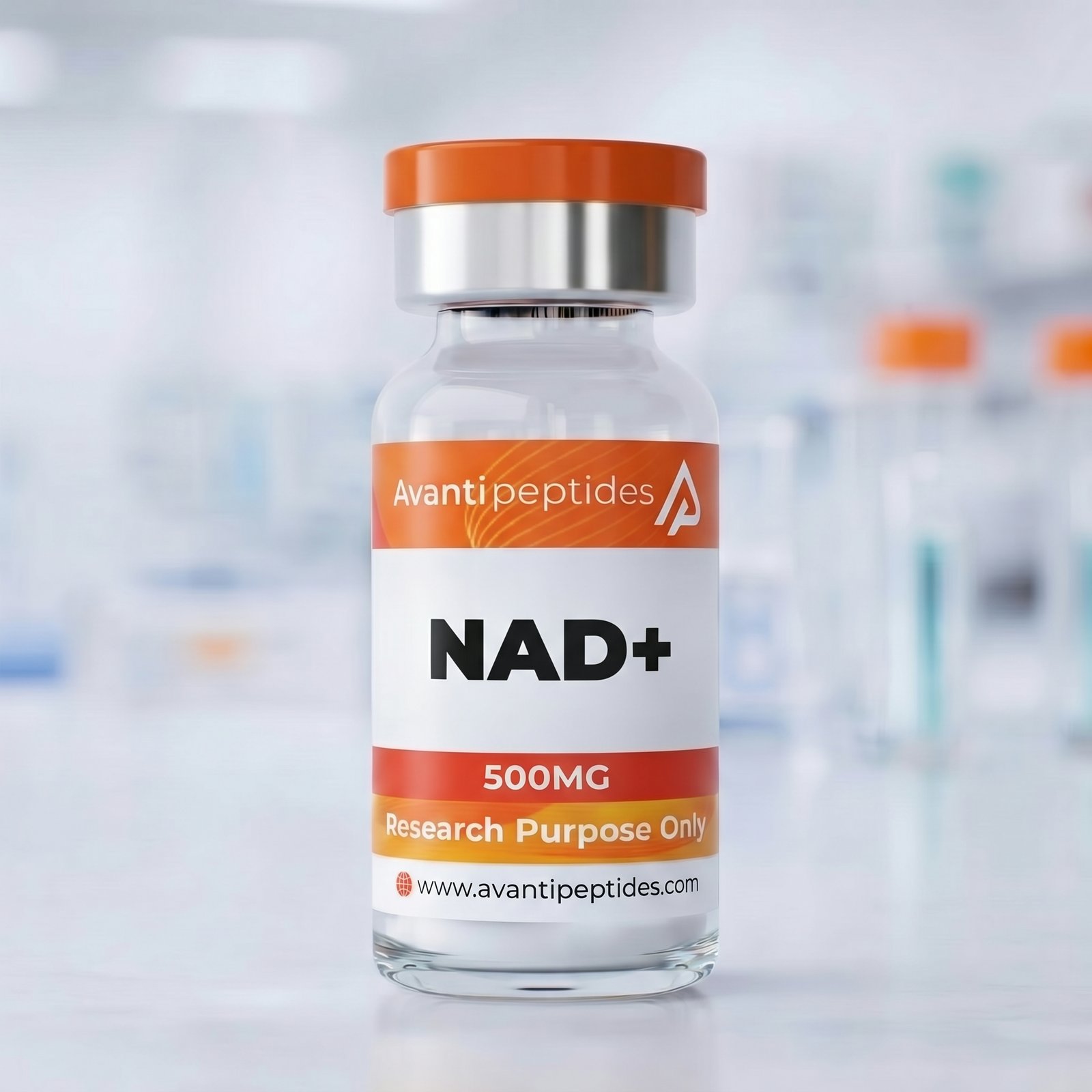
NAD+ is the oxidised form of nicotinamide adenine dinucleotide, supplied as a lyophilised research compound in a 500 mg vial. This redox coenzyme is central to electron-transfer chemistry across metabolism, which makes it a standard cofactor reagent for in-vitro assays of dehydrogenase activity, oxidative phosphorylation and sirtuin-dependent signalling.
Key features of NAD+
- Redox dinucleotide coenzyme (non-peptide research compound)
- Lyophilised solid — stable, easy to store, straightforward to reconstitute
- Unit size: 500 mg / vial
- Every batch released only after identity, purity, and appearance QC
- Certificate of Analysis (CoA) and batch documentation available on request
NAD+ technical specifications
| Product name | NAD+ |
| Synonyms | Nicotinamide adenine dinucleotide (oxidised); Coenzyme I; DPN+; β-NAD |
| Class | Redox dinucleotide coenzyme (non-peptide research compound) |
| Molecular formula | C₂₁H₂₇N₇O₁₄P₂ (free acid) |
| Molecular weight | ~663.43 g/mol |
| CAS number | 53-84-9 |
| Purity | ≥99% (HPLC) |
| Physical form | Lyophilised powder |
| Appearance | White to off-white solid |
| Unit size | 500 mg / vial |
| Note | Not a peptide — values vary with salt form (e.g. disodium) and hydration state |
Reconstituting and storing NAD+
- Before reconstitution: Store lyophilised vials at 2–8 °C, protected from light and moisture.
- Equilibrate: Allow vial and diluent to reach room temperature before opening.
- Reconstitute: Add Bacteriostatic Water (10 ml recommended). Swirl gently — do not vortex.
- After reconstitution: Store at 2–8 °C. Prepare aliquots to minimise freeze–thaw cycles.
- Compatibility: Use only within protocols that comply with your institution’s SOPs and local regulations.
Looking for complementary materials? See Bacteriostatic Water 10ml — recommended diluent, MOTS-c 10mg, Epitalon 10mg — cellular-ageing research companion.
NAD+ in research
Researchers use NAD+ to satisfy the cofactor requirements of dehydrogenase assays, assess redox balance across the NAD+/NADH couple in cell systems, and examine NAD+-consuming enzyme families including the sirtuins and PARPs. Because this redox coenzyme is hydrolytically labile in solution, prepare working stocks fresh and store the remainder cold and dark.
Synthesis and quality assurance
Avanti Peptides manufactures NAD+ via controlled, validated solid-phase peptide synthesis (SPPS) to deliver high purity and lot-to-lot consistency. Each batch undergoes identity verification, HPLC purity analysis (≥99%), and appearance inspection before release.